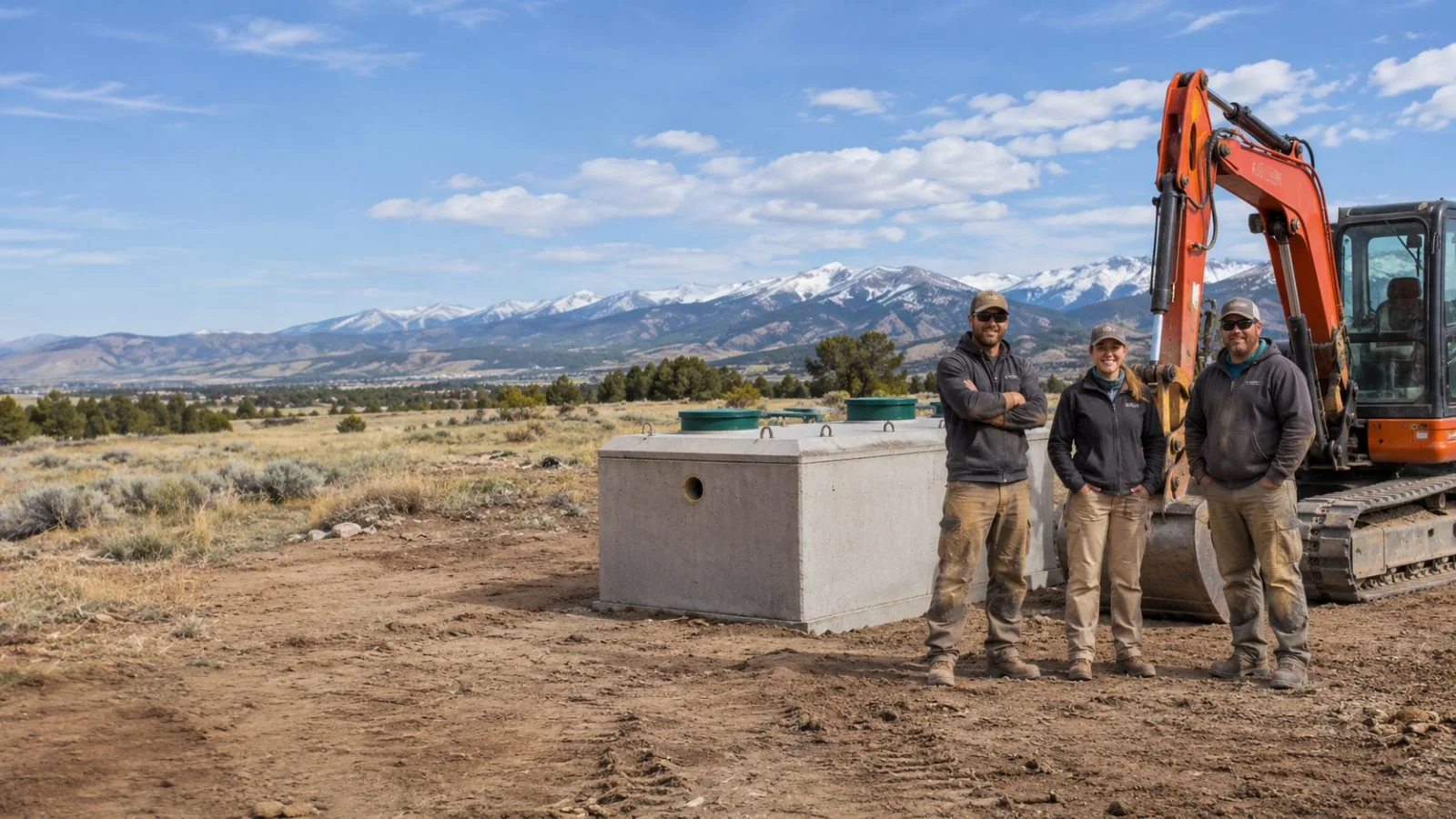
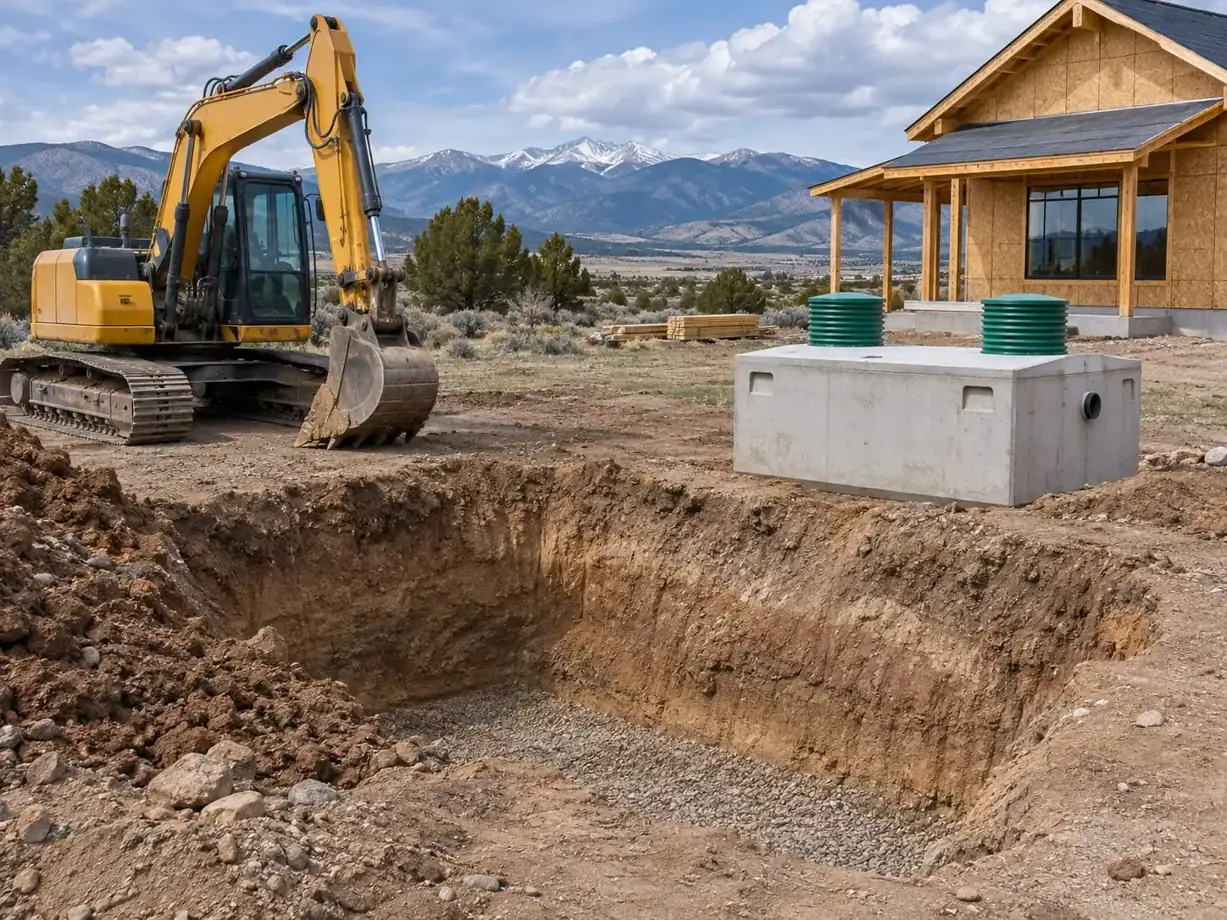
Septic systems operate as a connected set of components. Wastewater leaves the building, enters the tank, and then moves through the distribution system to the soil treatment area. Trouble anywhere along that path can affect drainage inside the home. ## When a Septic Problem Needs Attention Persistent backups, gurgling fixtures, sewage odors, standing wastewater, and unusually wet ground near septic components are signs that deserve investigation. A problem affecting multiple fixtures may indicate a broader issue than a single clogged sink. If sewage is entering the home or wastewater is exposed outdoors, limit water use and avoid contact with contaminated areas. Do not open or enter tanks, lean over open access points, or attempt unprotected repairs. Septic tanks can contain dangerous gases, and excavations can collapse. ### Repair or Replacement? A damaged accessible pipe or distribution component may be repairable without replacing the entire system. A structurally failed tank or unsuitable treatment area may require more extensive work. The right answer depends on the actual condition of the components and applicable permitting requirements.
Damaged or Blocked Septic Piping
Pipes between the home, tank, and soil treatment area can become blocked, displaced, or damaged. Root intrusion, ground movement, improper loading, and age are among the possible contributors. Finding the affected section is important before excavation. Where a localized repair is appropriate, the repair must preserve the correct function of the wastewater system and meet applicable requirements.
Septic Tank Component Problems
Inlet and outlet components help direct wastewater through the tank. Deterioration or damage can interfere with the separation and transfer of wastewater, potentially allowing materials to move where they should not. A tank evaluation may identify components that need attention. Structural conditions must also be considered because replacing a fitting cannot correct a tank that is no longer sound.
Distribution System Issues
Distribution components help move treated tank effluent toward the intended soil treatment areas. A problem can cause uneven loading, restricted flow, or wastewater collecting where it should not. Repair feasibility depends on the existing design, accessibility, and condition of the treatment area. Adjustments should not be made blindly because changing distribution can create new problems elsewhere in the system.
Recurring Backups and Odors
Recurring wastewater problems may have more than one contributing cause. Maintenance history, water use, plumbing conditions, tank condition, and soil treatment performance can all be relevant. Instead of treating every backup as a tank problem, the system should be considered as a whole. A professional evaluation can help distinguish a plumbing obstruction from a larger onsite wastewater concern.
Repairs After Ground or Equipment Damage
Vehicle traffic, excavation, landscaping, and ground movement can damage buried septic components. The extent of damage may not be visible at the surface, particularly when pipes or distribution structures are involved. Property owners should avoid further loading or disturbing the affected area until it has been evaluated. The repair plan should address the damage and help prevent similar problems in the future.